Product for this step
Powder · Mayka For Kids
0 reviewsMoroccan ritual & routine · Step by step
Rhassoul clay mixed thin, massaged into the scalp, kept soft and rinsed long: the Moroccan hair wash without foam, finished with argan oil on the ends.
 By Fatima AmgharMoroccan beauty editor at Bodywhatever™
 Ghassoul clay
1 product listing on Shopee Indonesia
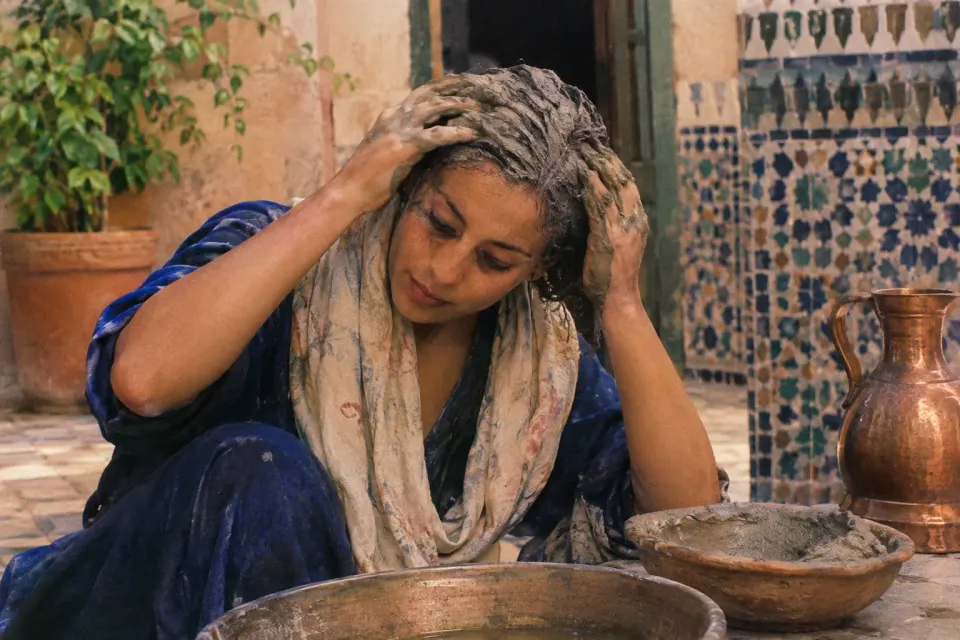
Rhassoul clay mixed thin, massaged into the scalp, kept soft and rinsed long: the Moroccan hair wash without foam, finished with argan oil on the ends.
For you if your roots feel heavy by the end of the week, your ends feel dry, and you want to get a clay wash right the first time.
Moroccan women were washing their hair without foam long before anyone gave it a name. In the hammam, rhassoul, the Atlas clay they call l-ghassoul, is mixed into a runny mud, massaged into the scalp and rinsed out while it is still wet. It takes up the oil of the roots and leaves with it, and the hair comes out light.
The whole art is in three details: a paste thin enough to pour, a clay that never dries on your head, and a rinse longer than you think. Here is the wash, from the bowl to the two drops of zit argan on the ends.
In Indonesia's heat and humidity, hair dries slowly and roots turn heavy fast: use half the oil you think you need, and let your hair dry fully before you cover it.
Foam is not what cleans. Rhassoul is a soft mud that clings to the oil and dust on the scalp and slides away with them under the water. That is why the paste goes on the scalp first, where the oil is, and only what is left is smoothed down the hair. Moroccan women like it because the roots come out clean and full while the ends are not stripped. The clay itself, and its use on skin, has its own page; this one stays on the hair.
A face mask can tighten a little as it sits; on hair that is exactly what you do not want. Clay that dries hard grips the strands, is difficult to rinse and leaves them rough. In the hammam, l-ghassoul is always used in the steam, where it stays moist. At home, keep the paste runny, work on soaking wet hair and rinse after five minutes. If it starts to dry, wet your hands and pat it.
In the hammam, hair is never forgotten. The clay goes on first and sits on the head while the saboun beldi, the black soap, works on the skin; the steam looks after both. Once a week is the rhythm, and the usual shampoo keeps the other washes. The finish is always the same: a few drops of zit argan on the ends, because clay cleans and oil softens.
Take a small glass or ceramic bowl, a wooden spoon, your ghassoul and a jug of warm water. Choose a day when your hair has time to dry afterwards.
Step 1
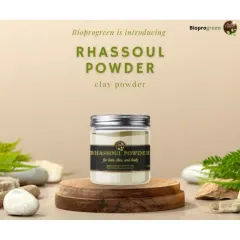
Rhassoul (ghassoul) comes as dry plates or powder that you mix yourself, or as a ready-made paste in a jar. Plates and powder need water and a few minutes; the paste is used as it is. Check that yours is meant for hair: some jars are blended as face masks. Take a glass or ceramic bowl, a wooden spoon and a jug of warm water, and choose a day when your hair has time to dry.
Step 2
Two to three tablespoons in the bowl, three for long or thick hair. Add warm water in small splashes, stirring, until it runs off the spoon like liquid yogurt; it is much easier to thin a paste than to thicken it again. Replacing part of the water with ma ward, rose water, is the classic Moroccan variation, and your hair carries the scent all evening. Let it rest two minutes to swell. Make only today's amount.
Product for this step
Powder · Mayka For Kids
0 reviewsStep 3
Stand under warm water until your hair is wet to the scalp, a full minute for thick hair. Warm water and steam open the way for the clay. Clay on dry or half-wet hair drags and dries in seconds.
Step 4
Part your hair and pour or dab the paste along each parting, from the forehead to the nape. Massage the scalp with your fingertips, not your nails, for two minutes. Then smooth what is left down to the ends without rubbing them together.
Step 5
Leave it five minutes at most, with the bathroom warm and the door closed. On hammam day this is the moment for your black soap: the clay sits on your head while the soap softens your skin. Touch your hair now and then; it should still feel wet and slippery.
Step 6
Rinse with warm water, opening the hair with your fingers under the stream, section by section, until the water runs clear and nothing feels gritty at the nape or behind the ears. It takes longer than a shampoo, and that is normal.
Step 7
Squeeze the water out with a towel. Warm two drops of argan oil in your palms and press them into the last third of your hair, never the roots. Let your hair dry in the air if you can, and let the roots dry completely before you tie it up. Then touch it: light roots and soft ends mean the mix suited you.
A small tip: comb your hair with your fingers before you step in. Untangled hair lets the clay reach the scalp, and it rinses more easily.
Long and curly hair holds more clay, so give it more water in the mix and more time under the shower, section by section. Your usual conditioner on the ends afterward brings the softness back before the argan. If you cover your hair during the day, do this wash in the evening, so the roots dry fully in the air before morning.
A paste as thick as a face mask. On hair it should pour. If your hair felt rough after rinsing, this is almost always why.
Letting it dry while you do something else. Five minutes, in a warm bathroom, and wet hands if it starts to set.
Rinsing as fast as a shampoo. Grit left at the nape is what makes people give up on clay.
Waiting for foam, or piling the ends on top of the head and scrubbing. Clay does not lather, and the ends only need what runs down.
Skipping the oil. Without the two drops, clean ends can feel bare.
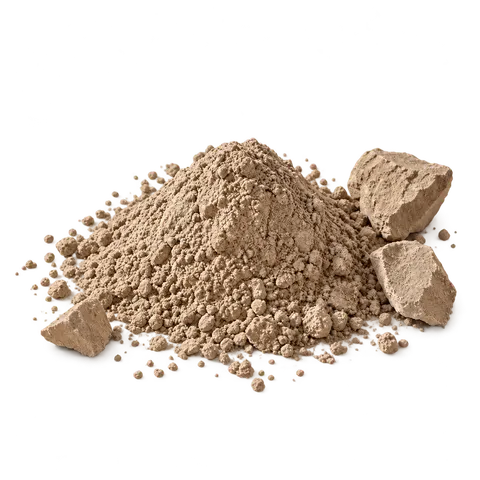
For a hair wash, plates or powder are the simplest choice: the only ingredient should be the clay, listed as rhassoul, ghassoul or Moroccan lava clay, from Morocco. Dry, it is brown to gray-brown; in water the plates melt within minutes into a smooth mud that smells of wet earth. Fine powder mixes faster and leaves less grit, which matters more on hair than on skin.
What to refuse: a perfumed clay, a long ingredient list sold as pure, a pale bag with no origin, and a face-mask jar used on hair without reading it. A ready-made paste for hair is fine if you know what was added.
A Bodywhatever™ selection: Moroccan care you can buy in Indonesia.
Some product links are affiliate links. If you buy through them, Bodywhatever™ may earn a commission. Purchases, payment, delivery and returns are handled by the seller or marketplace, not Bodywhatever™. Prices and availability can change.
Use suitable products you already own. This selection may not cover every step; open CareFinder to apply your budget and BPOM and Halal preferences.
Common questions
On the day you use it, yes. Many women wash with rhassoul once a week and keep their usual shampoo for the other washes.
About five minutes, and never until it dries. Rinse while the clay is still soft and wet.
Warm water is enough. Replacing part of it with rose water is the classic Moroccan variation, and it leaves a light scent on the hair.
Usually the paste was too thick or stayed on too long. Make it more liquid next time, keep it to five minutes, and finish with argan on the ends.
Once a week is the Moroccan rhythm, on hammam day or on its own. Your usual shampoo does the rest of the week.
Always on soaking wet hair. Water lets the clay spread, keeps it soft and makes the rinse easy.
Many women with curls use it, with a thinner paste, a section-by-section rinse and conditioner on the ends afterward. Try it once and judge when your hair is dry.
In Indonesia you can order it on Shopee. Bodywhatever™ keeps a short selection of what can be delivered there, so you do not have to search through hundreds of listings. Open it here:
 15 minutes
Ritual & routine · Hair Care
Shampoo at the scalp, rinse longer than you think, and let the roots dry completely. No oil today.
You
Bodywhatever™
Heat, sweat and hours with your hair covered make roots go flat fast. Here is a weekend reset that feels clean without stripping.

Bodywhatever™ · CareFinder
Tell us about your hair or skin and your current habits. CareFinder explains where Moroccan ingredients fit and puts together care steps, with product options in Indonesia.
Find my care planFree · Email code · Saved in My Bodywhatever™
Make money with Bodywhatever
Create your bwe page for free. Share your routines, add your Shopee links and earn when people buy what you recommend.
Free. Takes 5 minutes. Sign in with an email code, no password.

Turn your wash day, skin night or hammam ritual into simple steps.
Pick the products you really use and add your own affiliate links.
Put one link in your bio and see your page views and product clicks.

 Listed on Shopee Indonesia