Soap · Amazon.com
0 reviewsMoroccan care at home
Rough elbows, knees and heels? Use Moroccan black soap the way Morocco does: warm skin, a thin film, a full rinse, then the kessa mitt.
 By Fatima AmgharMoroccan beauty editor at Bodywhatever™
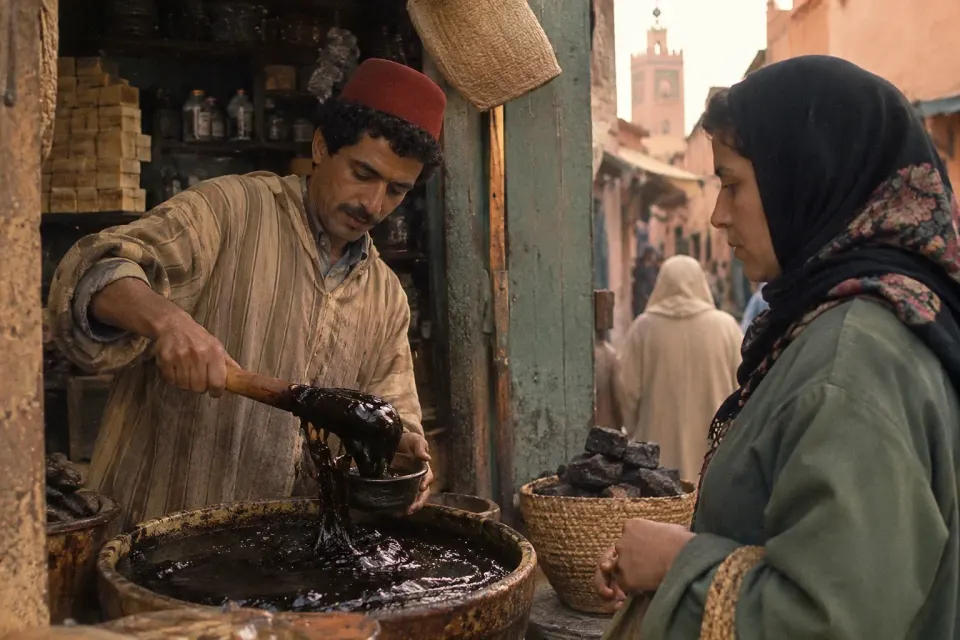
Saboun beldi is not a bar. It is a dark, soft paste of olive and often eucalyptus, scooped with the fingers and spread in a thin film on warm skin. In the hammam it sits for a few minutes, then it is rinsed off completely before the kessa mitt goes on.
That order matters. If you scrub over the soap, you irritate the skin and you miss the point. Here is the method as it is done in Morocco, and how to tell a real beldi paste from a dyed gel.
What the world calls Moroccan black soap, we call saboun beldi, which simply means the traditional soap, the soap of the country. It is made from olives and olive oil cooked slowly with potash until they become a thick paste, somewhere between amber and dark brown. It smells green, a little like an olive press, and it does not foam. In the medina it is scooped from big tubs with a wooden paddle, and most families keep a jar next to the hammam bag.
Its job is not to scrub. Its job is to soften. On skin that is already warm and damp, the paste loosens the layer of dead skin that makes elbows, knees, shins and heels feel rough. That is why the hammam order never changes: warmth first, then saboun beldi, then a full rinse, then l-kissa, the rough kessa mitt, then rhassoul (ghassoul) clay if you want it, and zit argan, argan oil, at the very end. Each step prepares the next. Soap on cold, dry skin does very little. A mitt on skin that has not been softened only scratches.
And the rinse in the middle? After a few minutes the soap has done its work. If it stays on, the mitt slides instead of gripping, you press harder to make up for it, and you end up rubbing an alkaline paste into your skin. Rinsed skin gives the mitt something to hold, and the dead skin rolls off with light strokes.
One more thing Moroccan women know: the soap on its own is not a lesser version. Between two full hammam days, a thin layer, five quiet minutes and a long rinse with bare hands already leave the skin clean and supple. If all you want today is softer skin in one shower, you can stop before the mitt.
Stand under comfortably warm water for 5 to 10 minutes, with the bathroom door closed so the room gets a little steamy. Warm, not burning. In the hammam nobody reaches for the soap in the first minutes: women sit, pour water from the bucket and talk while the heat does its part. You are ready when your skin feels soft under your fingers.
Before you step under the water, take the soap out of the jar with dry fingers and drop it into a small bowl: about the size of a walnut for the whole body, a teaspoon if you are only doing arms and legs. It is a habit in Moroccan bathrooms, because water in the jar spoils the paste. A jar that stays dry inside keeps its texture to the last spoonful, and a little goes a long way.
Turn the water off. Warm the paste between your wet palms until it loosens, then spread it over your damp body from the shoulders down, like a thin mask. Spend a little longer on elbows, knees, shins and heels. It will not foam, and that is normal: you want a slippery, almost invisible film, not lather. Keep it below the neck and away from your eyes. If it is your first time, try it on your forearm before the rest.
Now do nothing. Sit on the edge of the tub or on a small stool, the way we sit on the warm floor of the hammam, and give the soap 3 to 5 minutes. Do not let it dry: if the film starts to feel tight, wet your hands and pass them over it. Longer is not better. Five minutes on warm skin is all it needs.
Rinse with warm water and your bare hands until your skin no longer feels slippery. Take your time behind the knees, along the back and between the toes. This is the step people rush, and it decides how everything after it goes. On a soap-only day you are finished here, and your skin already feels softer under your fingers.
The kessa, l-kissa in Darija, is the rough mitt of the hammam. Wet it, wring it out and work on rinsed, still warm skin, starting at the feet and moving up. Light pressure is enough: the dead skin comes away in small gray rolls, and your skin should never sting. Keep the mitt for the body, once a week at most, then rinse one more time.
Pat your skin with the towel instead of rubbing. While it is still a little damp, within about three minutes, put on your usual moisturizer, or do as we do after the hammam: a few drops of zit argan warmed in the palms and pressed into shins, elbows and knees. Oil seals water in, it does not add it, which is why the damp skin matters. Real saboun beldi is alkaline and can leave skin feeling tight if you skip this step. Then get dressed in something soft.
Scrubbing over the soap is the first one, and the most common. Rinse, then pick up the mitt. The second is using too much: a thick layer does not soften more, it only takes longer to rinse off.
Putting it on cold or dry skin is the third. Without warmth and water the paste drags and does very little. Waiting for foam belongs here too: saboun beldi never lathers, so adding more or rubbing harder to get bubbles only tires the skin.
Then there is rhythm. In Morocco this is a weekly appointment, not a daily wash. On the other days your regular gentle cleanser is enough, and if your skin turns red or stings, move to every two weeks. Last one: expecting it to change the color of your skin. Black soap helps lift dead skin, so skin looks fresher, but it does not fade dark spots or marks.
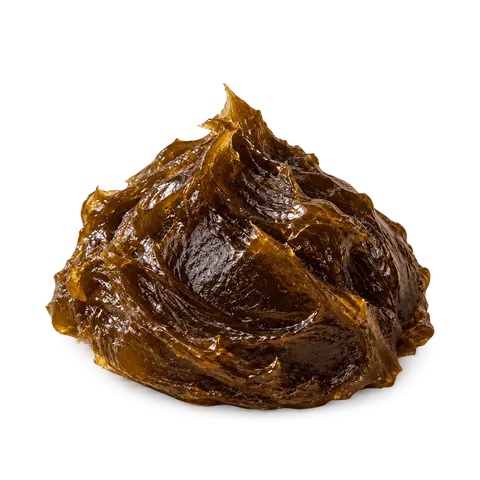
Look for a thick, smooth paste, somewhere between amber and dark brown, that turns olive green when you spread it thin. The ingredient list is short and built around olives: olive oil or olive paste, water and potassium hydroxide, the potash that turns oil into soap. Some labels simply say saponified olive oil. Eucalyptus is the classic hammam version and smells wonderful in steam; choose the plain one if you prefer no added scent. A real paste stretches like thick jam, melts into a slippery film with water and barely foams.
Refuse the transparent, bright green or jet-black gel that wobbles like jelly, the long list full of colorants and thickeners, the generous foam, and the heavy perfume that hides the smell of olives. A price far too low for the size of the jar usually tells the same story. A Moroccan grandmother opens the jar, smells it, rubs a little between two fingers, and puts that one back.
Check the origin too. Black soap is not always Moroccan: West African black soap is a different product, usually solid, with its own way of being used. And buy the kessa separately, so you can pick a finer weave if your skin is sensitive. At home, close the lid well and keep water out, and the jar will last a long time.
A few products that fit this story. You do not have to buy anything: check the ingredients, price and delivery on the seller’s page.
Soap · Amazon.com
0 reviewsSoap · Amazon.com
0 reviewsSoap · Amazon.com
0 reviewsCommon questions
Once a week is the Moroccan rhythm, with or without the mitt. If your skin feels tight or turns red afterwards, space it out to every two weeks. It is not meant to replace your daily wash.
It is made for the body first, and the skin of the face is thinner. Use it there only if your jar says it is made for the face: a pea-sized amount, one minute, a good rinse, and no mitt. Otherwise keep it below the neck.
No. Black soap on its own cleans and softens. The kessa is a separate step, for the day you want the full hammam scrub, and it always comes after the rinse.
Because it is the real thing. Saboun beldi melts into a slippery film instead of lather. A black soap that foams like shower gel is usually a gel with added foaming agents.
It can feel drying, because a traditional olive soap is alkaline. That is why it stays on for only a few minutes, once a week, and why moisturizer or a few drops of argan oil on damp skin are part of the method. Try it on your forearm the first time.
No. It helps lift dead skin, so the surface looks smoother and fresher, but it does not change the color of your skin.
No. Moroccan saboun beldi is a soft olive paste that you leave on warm skin and rinse. West African black soap is a different, usually solid soap with other ingredients. Check the origin and the ingredient list before you buy.
In the United States you can order it on Amazon. Bodywhatever™ keeps a short selection of what can be delivered there, so you do not have to search through hundreds of listings. Open it here:
Body Notes Journal
Discover Moroccan beauty traditions, learn how to use the ingredients and find products available locally.
By subscribing, you agree to receive these emails. You can unsubscribe at any time.
Make money with Bodywhatever
Create your bwe page for free. Share your routines, add your Amazon links and earn when people buy what you recommend.
Free. Takes 5 minutes. Sign in with an email code, no password.

Turn your wash day, skin night or hammam ritual into simple steps.
Pick the products you really use and add your own affiliate links.
Put one link in your bio and see your page views and product clicks.