Product for this step
Leave-in conditioner · Toktoki
0 reviewsMoroccan ritual & routine · Step by step
Water first, a cream if you need it, argan oil last: the Moroccan order that keeps curly hair soft and light until the next wash.
 By Fatima AmgharMoroccan beauty editor at Bodywhatever™
 Argan oil
2 product listings on Shopee Indonesia
Water first, a cream if you need it, argan oil last: the Moroccan order that keeps curly hair soft and light until the next wash.
For you if your curls are soft on wash day and dry by day two.
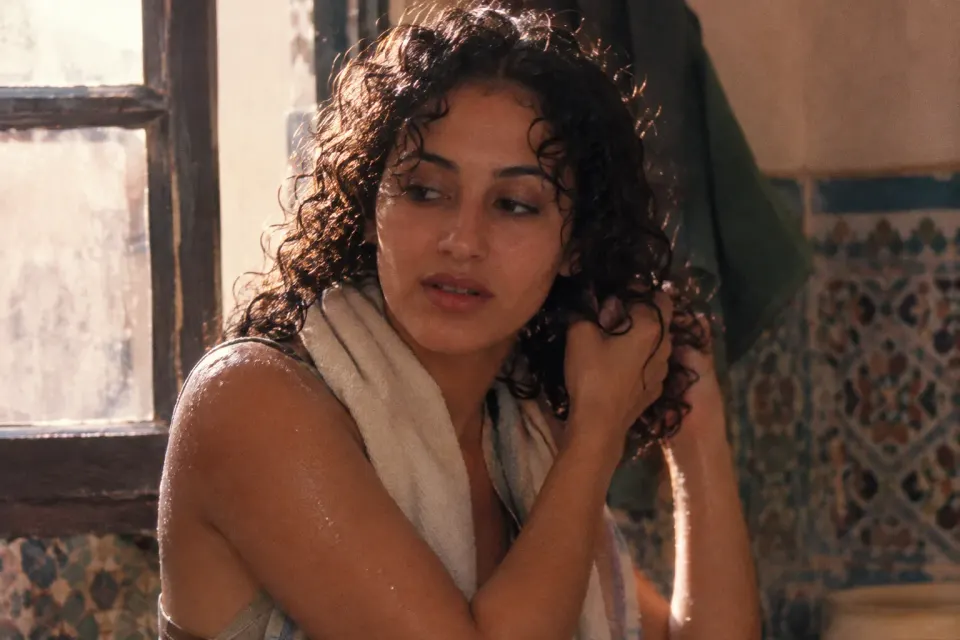
Many Moroccan women have curls — soft waves in the north, tighter coils further south — and zit argan has always been the finish, not the first product in the bowl. Water first, a cream if you need it, then a few drops of oil to seal the water in. That is the order.
Oil alone does not moisturize a curl; it keeps the moisture from leaving. If your curls are soft on wash day and dry by day two, this is the gesture to steal.
In Indonesia's heat and humidity, hair dries slowly and roots turn heavy fast: use half the oil you think you need, and let your hair dry fully before you cover it.
A curl is a hair that bends, and the oil your scalp makes has a harder time traveling down a spiral than down a straight strand. So the ends dry out first, and the whole head loses water faster between washes. That is why curly hair feels soft in the shower and rough the next afternoon. It was never short of oil. It was short of water.
Moroccan women answer this with an order, not with a bigger quantity. Water goes in first, in the hammam or in the shower. A cream holds that water against the hair. Zit argan, the everyday Darija name for argan oil, goes on last and in drops, like the lid on a tagine: it adds nothing to the pot, it only keeps the steam from leaving. Put the lid on an empty pot and nothing cooks. Put oil on dry curls and you get an hour of shine with the same dryness underneath.
Argan suits this job because it is one of the lighter oils. It spreads thin, sinks in within a few minutes and leaves the curl free to spring back. A heavier oil coats the spiral and pulls it down. With argan, the weight only comes from using too much.
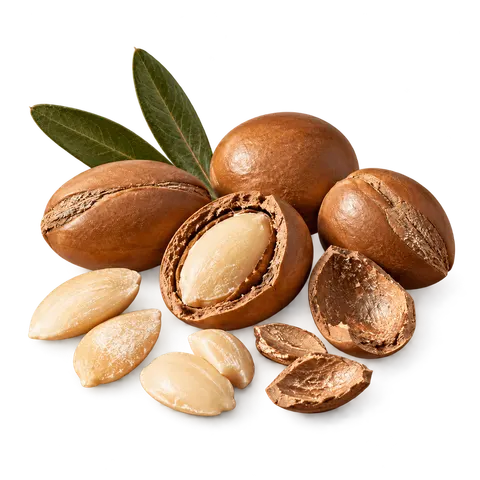
The argan tree grows in one place on earth: the southwest of Morocco, between Essaouira, Agadir and the Anti-Atlas. Amazigh women crack the nuts by hand, one by one, and many of them work in cooperatives that they run themselves. UNESCO protects the argan forest as a biosphere reserve and lists the know-how of these women as heritage of humanity.
There are two argan oils, and only one belongs in your hair. The oil for hair and skin is pressed from unroasted kernels: pale gold, with a faint nutty smell that fades on the skin. The roasted kernels give the darker, toasted oil Moroccans eat with bread. Both are real. The second one stays in the kitchen.
Step 1
Do this in the shower or right after it, the way hair is still streaming when a Moroccan woman leaves the hot room of the hammam. Do not towel-dry first. If water is running down your neck, you are at the right moment. If it is truly pouring, squeeze the ends gently in your fists, and never rub.
Step 2
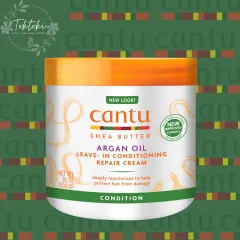
Split your hair into four sections, or six if it is very thick. Take a hazelnut-size amount of leave-in cream for each section and comb it through with your fingers from the ends upward, stopping about 2 inches (5 cm) from the roots. Fine waves that go flat easily can skip the cream and go straight to the oil. That is what a cream if you need it means in the Moroccan order.
Product for this step
Leave-in conditioner · Toktoki
0 reviewsStep 3
Count the drops into your palm: 1 or 2 for waves, 3 or 4 for curls, 5 or 6 for tight coils or very thick hair. That is for the whole head, not for each section. Rub your hands together until the oil is warm and your palms only look glossy, the same gesture Moroccan women use for their skin after the hammam.
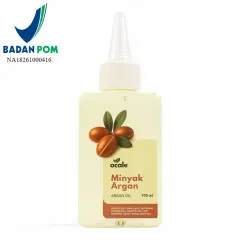
Product for this step
Oil · Ocale Official Store
0 reviewsStep 4
Smooth your palms over each section starting at the ends, the oldest and driest part, and move up to about ear level. Whatever is left on your hands is enough for the top layer. Never start at the roots. Then cup the curls in your hands and scrunch upward toward the scalp, so the spirals form again around the water you just closed in.
Step 5
Air-dry, or use a diffuser on low heat, and keep your hands out of your hair. Every touch on a half-dry curl pulls it apart into frizz. This is a good moment for a glass of mint tea.
Step 6
When your hair is fully dry, the cream may have left the curls a little stiff. Warm one single drop of zit argan in your palms and scrunch once, all over. The stiffness gives way and the curls come out soft and separate, with a quiet shine.
Step 7
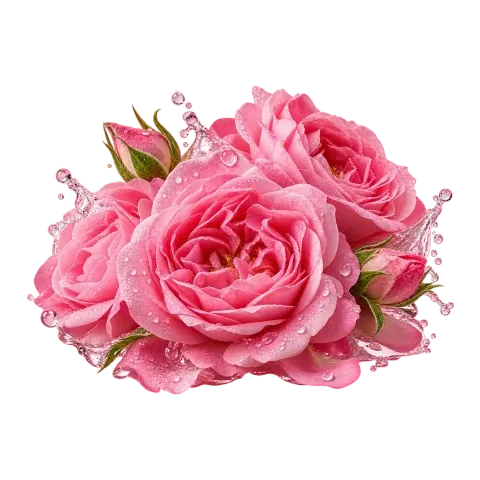
Curls that look tired the next morning are asking for water, not for more oil. Mist them with plain water or with ma ward, the rose water Moroccan women keep for face and hair, until they are lightly damp. Then scrunch in one drop of zit argan to close it in. Same order, smaller amounts.
A small tip: sleep on satin, or wrap your hair in a silk scarf as Moroccan women do. Your curls will thank you in the morning.
Putting oil on dry hair. It is the most common one. With no water underneath there is nothing to seal, so the curls shine for a moment and feel just as dry by evening. If your hair has already dried, wet it again before the oil.
Using too much. Moroccan grandmothers measure zit argan in drops, never by the palmful. If your curls look stringy or feel greasy by the end of the day, cut your count in half on the next wash day.
Oil first, cream after. Once oil is on the hair, water and cream slide over it instead of going in. Keep the order: water, cream, oil.
Starting at the roots. Your scalp makes its own oil, and adding more there is what flattens the top while the ends stay thirsty. Ends first, and the top only gets what is left on your hands.
Rubbing with a towel, or playing with the curls while they dry. Both rough up the hair and undo the work of the last three steps.
Turn the bottle around. The ingredient list of real zit argan is one line: Argania spinosa kernel oil. Nothing before it, nothing after it. Look for the words cold-pressed and unroasted or cosmetic, a dark glass bottle that protects the oil from light, and a named origin in Morocco, ideally a women's cooperative.
In the hand, it is pale gold with a soft nutty smell that disappears a minute after you apply it. A drop on the back of your hand sinks in within a few minutes and leaves the skin soft, not slick.
Refuse a bottle that smells of perfume, or one that lists silicones, fragrance or other oils before the argan. An oil with no color and no smell at all has usually been heavily refined. Many bottles sold as Moroccan oil are styling serums with a little argan near the end of the list. A serum can have its place on wash day, but know which of the two you are buying. And be wary of a very large bottle at a very small price: the kernels are cracked by hand, and a real oil is never the cheapest one on the shelf.
You do not need much. At a few drops per wash day, a bottle of 1 to 2 ounces (30 to 60 ml) lasts for months. Keep it closed, away from the window and from the heat of the shower.
For the cream, choose a light leave-in with water as its first ingredient. If argan oil appears on its list, good, but it does not replace the drops at the end.
A Bodywhatever™ selection: Moroccan care you can buy in Indonesia.
Some product links are affiliate links. If you buy through them, Bodywhatever™ may earn a commission. Purchases, payment, delivery and returns are handled by the seller or marketplace, not Bodywhatever™. Prices and availability can change.
Use suitable products you already own. This selection may not cover every step; open CareFinder to apply your budget and BPOM and Halal preferences.

Leave-in conditioner · Hair
from Rp 56.000
 Listed on Shopee Indonesia
Sold by Toktoki

Our pick
Best for: a first bottle of pure argan oil
Oil · Skin · Hair
Rp 99.000
Listed on Shopee IndonesiaSold by Ocale Official Store
Common questions
No. Argan is one of the lighter oils, and it only weighs curls down when there is too much of it. Waves need 1 or 2 drops, curls 3 or 4, and tight coils can take 5 or 6. If your hair is fine, keep the oil on the ends only.
On wet hair, as the last layer over water and cream. The one exception is a single drop scrunched into fully dry curls at the very end, to soften them. On dry hair with nothing underneath, oil gives shine but no softness that lasts.
Every wash day, as the final step, and one drop with a mist of water on the days in between when your curls feel dry. If your hair starts to look dull or coated, skip the in-between drops and keep only the wash-day ones.
Mist with water or rose water until your hair is lightly damp, then scrunch in one drop of argan oil. Water wakes the curl up, and the drop keeps it that way.
They do two different jobs. A leave-in is mostly water and brings moisture; the oil holds it in. Fine waves can often do well with water and oil alone. Thirsty curls and coils usually want both, cream first and oil over it.
Honestly, that is not what it is for. What you can expect from zit argan is softness, shine and curls that feel less dry between washes. Ends that are cared for also tend to break less, so your hair can look fuller over time.
Read the back before the front. Real argan oil has one ingredient, Argania spinosa kernel oil, comes in dark glass, and has a light nutty smell that fades. A long list, a strong perfume, or a big bottle at a tiny price are the three signs to walk away.
In Indonesia you can order it on Shopee. Bodywhatever™ keeps a short selection of what can be delivered there, so you do not have to search through hundreds of listings. Open it here:
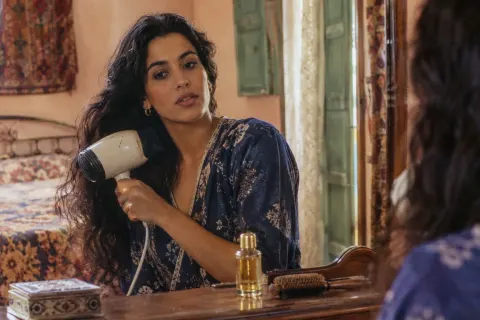 10 minutes
Ritual & routine · Hair Care
Heat protection before the dryer, two drops of Moroccan argan oil once the hair has cooled: where zit argan belongs in a blow-dry.
 15 minutes
Ritual & routine · Hair Care
A gentle wash, a weekly mask and a drop of Moroccan argan oil on the ends: how to keep colored or henna-dyed hair soft and bright.
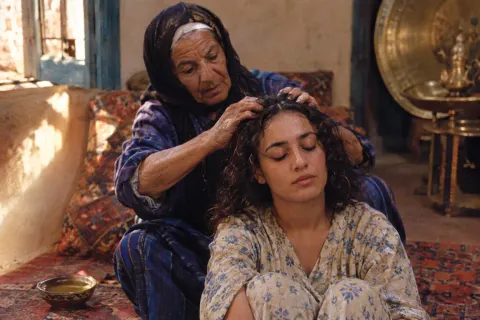 15 minutes
Ritual & routine · Hair Care
A few drops of Moroccan argan oil along the partings, five slow minutes with your fingertips, then shampoo: the weekly massage for a tight, dry scalp.
You
Bodywhatever™
Curious about Moroccan argan? Start with the dry parts of your hair, not another layer on your scalp. We’ll explain how a finishing oil differs from shampoo and conditioner.

Bodywhatever™ · CareFinder
Tell us about your hair or skin and your current habits. CareFinder explains where Moroccan ingredients fit and puts together care steps, with product options in Indonesia.
Find my care planFree · Email code · Saved in My Bodywhatever™
Make money with Bodywhatever
Create your bwe page for free. Share your routines, add your Shopee links and earn when people buy what you recommend.
Free. Takes 5 minutes. Sign in with an email code, no password.

Turn your wash day, skin night or hammam ritual into simple steps.
Pick the products you really use and add your own affiliate links.
Put one link in your bio and see your page views and product clicks.