What is Moroccan blue nila?
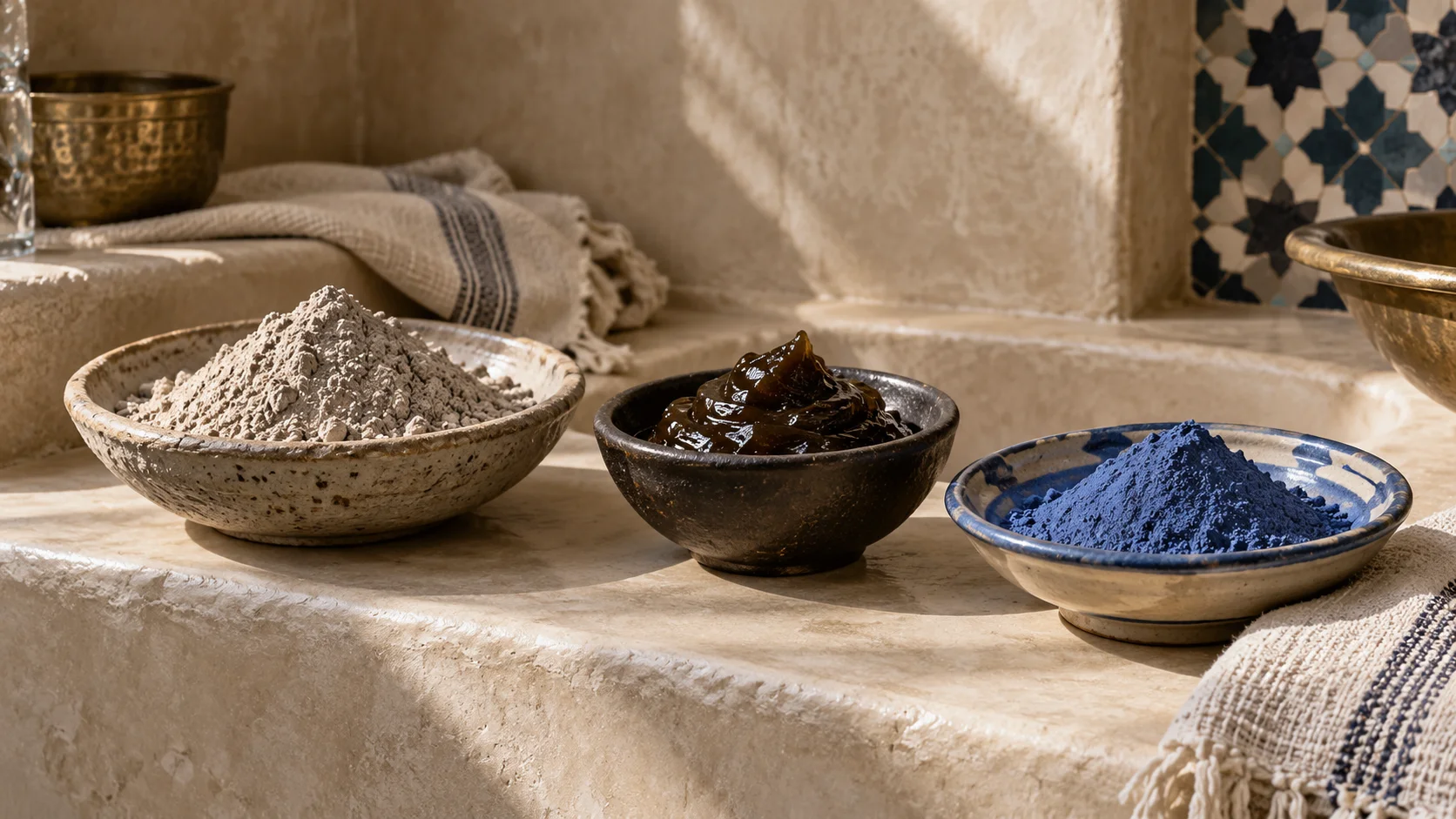
Moroccan blue nila is a deep-blue powder associated with Sahrawi body care and hammam rituals in southern Morocco. Traditionally, a small amount is blended into rinse-off care such as a mask or savon beldi; today its vivid colour has also made it popular in beauty videos and marketplace listings.
In Indonesia, the name blue nila appears on several different products: powders that need mixing, ready-made masks, powder blends and Moroccan black soap that already contains nila. Because the origin and composition of powders sold as nila can differ, the directions should come from the product actually in your hands—not a video recipe made with another one.
What you may encounter in online marketing
Nila appears in powder, mask and soap formats with vivid product photographs and sales claims such as brightening or glowing. Presentation does not establish composition, origin or a cosmetic result.
For Indonesian women who already use cleanser, moisturiser, sunscreen and perhaps active ingredients, nila makes more sense as an occasional rinse-off treatment—not something that replaces the basic routine or has to be added every day because it is viral.
Powder, mask blend or nila soap?
Nila powder commonly needs mixing according to its package ratio. A ready-made mask does not use the same recipe. Savon beldi with nila is a complete soap for the cleansing step; do not add more nila powder unless its maker explicitly instructs you to do so.
Before buying, identify the product format first. Look for front and back package photographs, composition, amount, intended area, timing and rinsing directions. That information is more useful than an unlabelled photograph of blue powder.
Where blue nila fits into an Indonesian woman’s skin-care routine
Treat nila as a rinse-off mask for an evening or an unhurried bathing session, not another layer before heading into the heat. Cleanse, use it only on the stated area and for the stated time, rinse until no colour or residue remains, then return to a moisturiser your skin already knows.
Humidity does not make skin immune to irritation. On a nila night, skip harsh scrubs, exfoliating acids and kessa friction on the same area. Patch test first, especially when the product is fragranced or unfamiliar. The next morning, sunscreen still belongs in the routine—nila is not sun protection.
What do asli, original and share-in-jar mean on a marketplace?
Asli, original, premium and Moroccan are words in a sales title, not evidence on their own. Look for the maker, manufacturing country, ingredient list, net weight, a cosmetics notification number where applicable, and readable photographs of the front and back package. An Indonesian seller address does not establish where the powder came from or where it was made.
A share-in-jar product removes some of the original package context. If the new container does not carry the composition, batch, expiry, directions and source identity, important information for assessing and tracing the product has been lost. A deeper blue is not proof of purity either.
Powder or blend
The name blue nila does not guarantee one standard composition. Some products are powders while others combine it with additional care ingredients.
Follow the product you have
Check how to mix it, the intended body area, timing and rinsing directions. If the ingredient list or instructions are unclear, choose a product with fuller information.
From the Moroccan hammam to a body-care trend
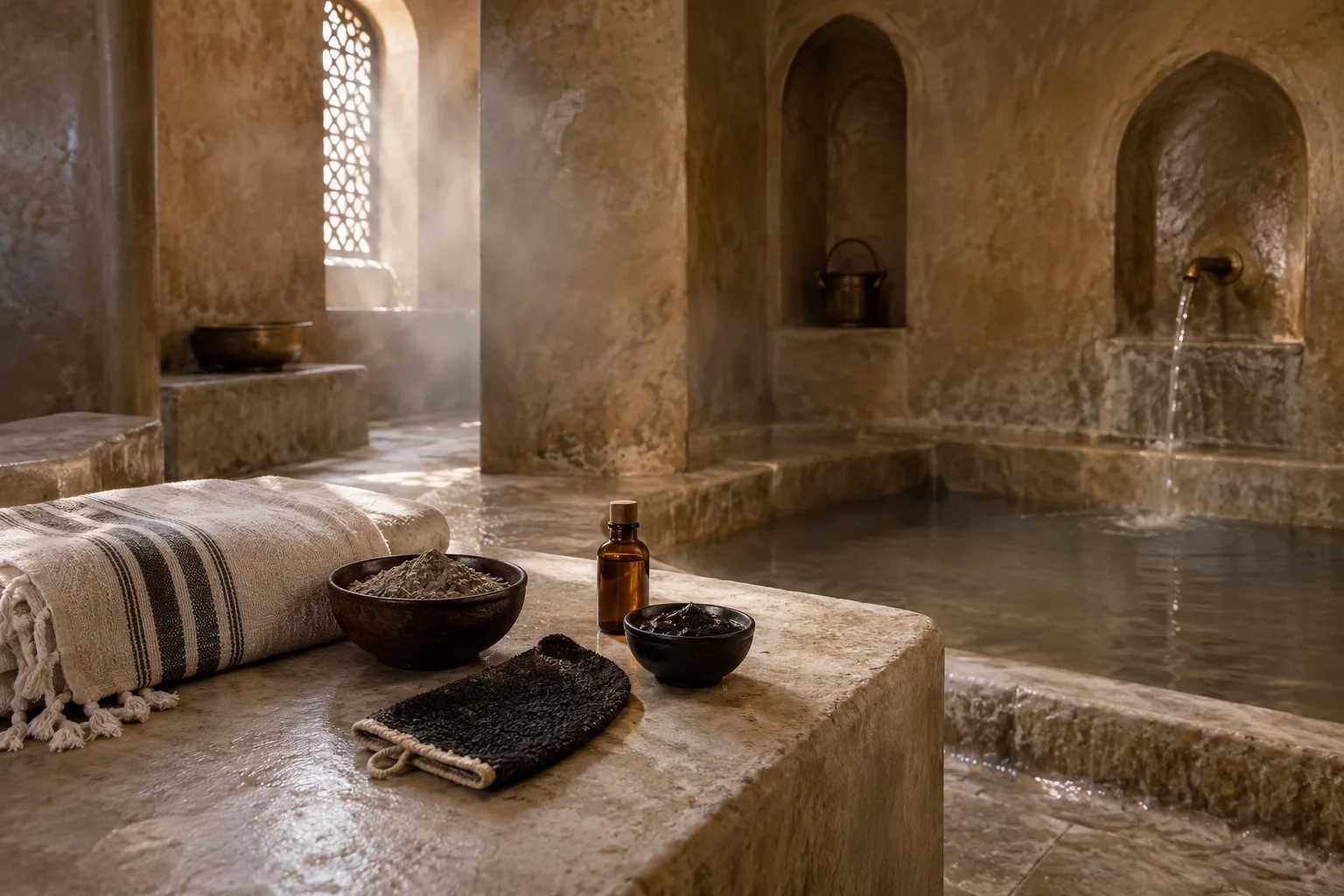
In Sahrawi care and the Moroccan hammam, nila is known as a blue powder used in rinse-off treatments. On Indonesian marketplaces, that story becomes body masks, nila soaps and products aimed at elbows, knees, underarms or folds with very strong brightening promises.
Nila is not an eraser for natural skin colour, and instant brightness is not a measure of safety. Colour in body folds may also be related to friction, moisture, repeated irritation or other conditions. Do not scrub harder or extend mask time to chase a before-and-after photograph.
How to try nila on the body without overdoing it
Choose one small area of healthy skin, use a clean bowl and tool, then follow the package ratio. For a powder, make only enough for one use. A ready-made mask or savon beldi with nila does not need an extra recipe borrowed from a video.
Do not combine the first session with a scrub, kessa glove, acid body serum or hard friction on body folds. Rinse fully, dry folds gently, then watch how the skin feels over the next day or two before deciding whether the product deserves another use.
What to check before buying blue nila online
Prefer intact packaging with composition, batch, expiry, intended area and complete directions. For cosmetics sold through the formal market, check the name or notification number in the BPOM database. A share-in-jar product without full identity makes that check much harder.
Do not choose from asli, original, premium, whitening or brightening language alone. Compare like with like—powder with powder, ready-made mask with ready-made mask—then look at net weight, composition, price, seller and actual package photographs before continuing to Shopee.
 Available in Indonesia