Bathing accessory · Amazon.sg
0 reviewsMaking sense of body care
Black soap softens, the kessa lifts, a scrub rubs with grains. What each one does, which one you need, and why never all three in one shower.
 By Fatima AmgharMoroccan beauty editor at Bodywhatever™
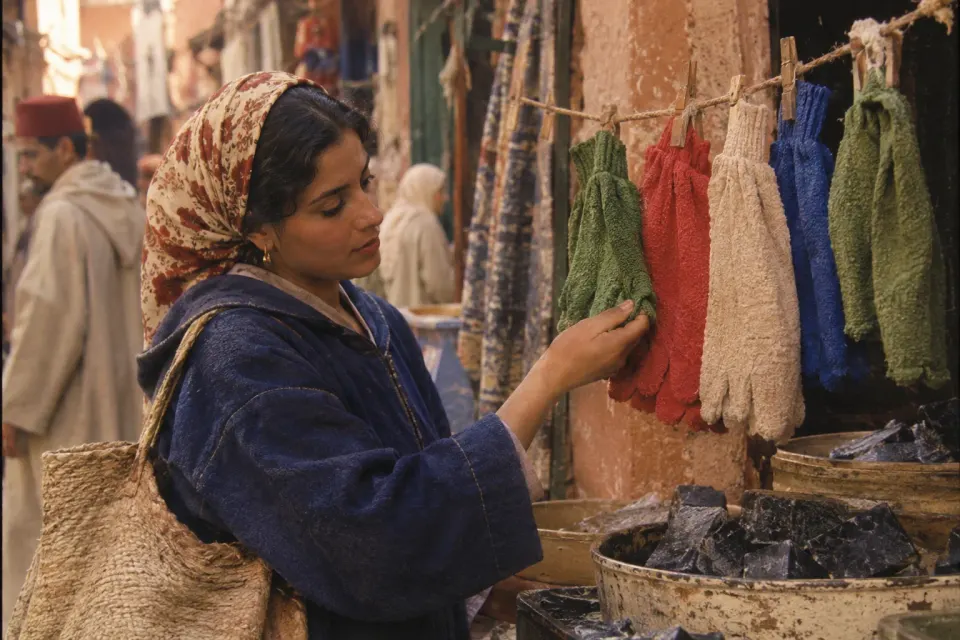
In the hammam, nobody asks whether to use saboun beldi or the kessa. They are not rivals. The black soap goes on first and softens the skin, it is rinsed off, and then l-kissa, the rough mitt, lifts what the soap has loosened. A body scrub in a jar is a third thing, born elsewhere, that tries to do both jobs at once with grains.
So the real question is not which one is best. It is what each one does, and which your skin needs this week. One rule first, the one Moroccan women never break: one kind of rubbing per shower.
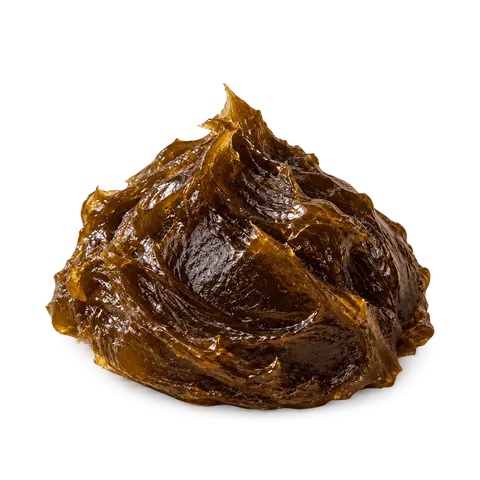
Saboun beldi, Moroccan black soap, is a dark, soft paste made from olives, often with eucalyptus. It has no grains and barely foams. It cleanses, and left for a few minutes on warm, wet skin it loosens the dead skin on the surface. On its own it is a gentle wash that leaves the skin supple. It is not a scrub, however dark and thick it looks.
L-kissa, the kessa, is a flat mitt of crinkled viscose. It works by friction, on skin that has been steamed and softened first. Used properly, with long strokes and the pressure you would use to erase pencil, dead skin rolls off in little gray threads. It is the exfoliating half of the hammam, and it is a weekly appointment, not a daily habit.
A body scrub is grains, such as sugar, salt or ground shells, carried in a cream or an oil. It is friction too, but grain against skin instead of cloth, and on skin that nobody softened beforehand. It is quick and needs no steam. It also does the same job as the kessa, so using both rubs the same skin twice. An exfoliating lotion with acids is another family again: it works without rubbing, and it should not share a day with either of them.
Rough elbows, knees and heels, or skin that feels dull all over: saboun beldi, then the kessa, once a week. A sweaty back and chest on a warm day: black soap as a wash is enough. You do not need friction to feel clean.
Skin that reddens easily: black soap alone, or the mitt very lightly on feet and elbows only. Small rough bumps on the upper arms: skip the hard rubbing, which can leave them redder, and moisturize well instead.
Soak under warm water for ten minutes with the door closed. Spread a thin film of saboun beldi, leave it for about five minutes, then rinse until nothing slippery is left. Only then does the damp kessa go on, area by area, with light strokes. Each of the two has its own page for the full method. The point here is the rinse in the middle: soap, rinse, mitt, in that order.
A kessa in a quick shower only scratches, because two minutes of water soften nothing. On a short day, either wash with black soap and your bare hands, or use a scrub on wet skin, in gentle circles, on the rough places only. Then rinse. That counts as your exfoliation for the week.
One exfoliation a week is plenty, whichever tool you pick, and less often if your skin turns red or stings. Black soap as a simple wash can come back between two hammam days. The mitt and the grains cannot.
Rinse lukewarm, pat dry, and within a few minutes press a few drops of zit argan, argan oil, into skin that is still slightly damp, or use the plain lotion you already own. Freshly scrubbed skin drinks it in. If your skin ever feels sore afterwards, give it a two-week rest with a simple moisturizer, then come back every other week with a lighter hand.
Using all three in one shower. Black soap, then the mitt, then a scrub 'to finish' is the fastest way to red, stinging skin.
Scrubbing over the soap. The mitt slides instead of gripping, you press harder, and nothing rolls. Rinse first, always.
Expecting black soap to scrub. It has no grains. If you rub it in hard, waiting for something to happen, you are only tiring your skin.
Using the kessa on dry skin. A dry mitt on dry skin scratches. It belongs on warm, wet, softened skin.
Taking either one to the face. The mitt and body grains are made for the body. A soft washcloth, or a mask of l-ghassoul, rhassoul (ghassoul) clay, is kinder there.
Saboun beldi: a thick, smooth paste between amber and dark brown that stretches like thick jam and barely foams, with a short ingredient list built on olive. Refuse the bright green or jet-black gel that wobbles like jelly, the generous foam and the heavy perfume. And check the origin: West African black soap is a different product, usually solid.
Kessa: a flat mitt in woven viscose with a visible crinkled grain, double-stitched edges and a snug elastic cuff. Take the softer weave for a first mitt. Refuse shiny nylon mesh, terry cloth, gloves with five fingers and anything padded with sponge: they lather nicely and roll nothing.
Body scrub: fine, even grains that you can barely feel between two fingers, in a base that rinses clean. Refuse large, sharp pieces and a perfume strong enough to sting freshly rubbed skin. You do not need all three on your shelf. The Moroccan pair, or one scrub, is a complete answer.
A few products that fit this story. You do not have to buy anything: check the ingredients, price and delivery on the seller’s page.
Bathing accessory · Amazon.sg
0 reviewsSoap · Amazon.sg
0 reviewsBathing accessory · Amazon.sg
0 reviews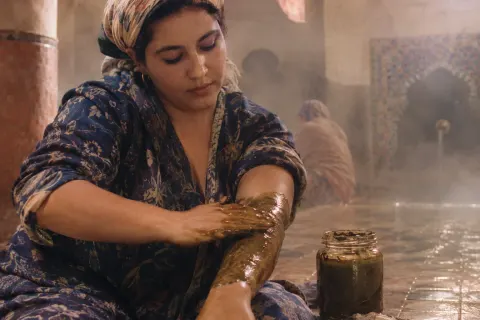 15 minutes
Ritual & routine · Bath & Body
Your first black soap session: warm water, a thin layer, five quiet minutes and a long rinse. No glove needed.
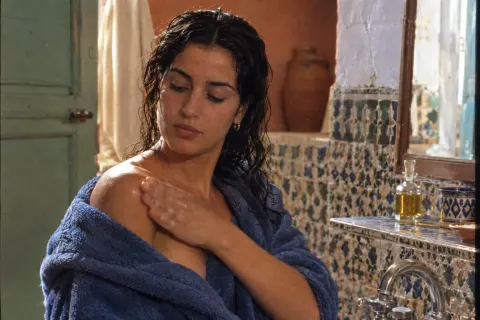 5 minutes
Ritual & routine · Bath & Body
Five minutes after your shower: pat dry, cream where you need it, and two drops of argan on the driest spots.
Common questions
Not in the same shower. Black soap already softens the skin for the kessa. Use black soap with a kessa, or a scrub on its own, not both.
No. Black soap and a kessa are one complete method. A scrub is another. Choose the one that fits the time you have, and keep the other off the shelf.
It works differently. The kessa needs ten minutes of warm water and black soap first, and then it lifts dead skin in visible rolls with light pressure. A scrub is quicker and needs no preparation. If you have the time, the Moroccan pair is the gentler way to do a whole body.
It softens and cleanses, and skin feels smoother after a long rinse with bare hands. The lifting itself is the mitt's work. If softer skin in one shower is all you want today, the soap alone is enough.
Once a week is plenty. Less often if your skin turns red or stings: every two weeks, with light pressure.
Often it is too much. Skip it, or use a soft weave very lightly on feet and elbows only, and let black soap do the rest as a simple wash.
In Singapore you can order it on Amazon. Bodywhatever™ keeps a short selection of what can be delivered there, so you do not have to search through hundreds of listings. Open it here:
Body Notes Journal
Discover Moroccan beauty traditions, learn how to use the ingredients and find products available locally.
By subscribing, you agree to receive these emails. You can unsubscribe at any time.
Make money with Bodywhatever
Create your bwe page for free. Share your routines, add your Amazon links and earn when people buy what you recommend.
Free. Takes 5 minutes. Sign in with an email code, no password.
Turn your wash day, skin night or hammam ritual into simple steps.
Pick the products you really use and add your own affiliate links.
Put one link in your bio and see your page views and product clicks.