Powder · Amazon.sg
0 reviewsMoroccan care at home
Rhassoul (ghassoul) is the Moroccan clay that washes hair, face and body without foam. How to mix it, how long to leave it on, and how to rinse it soft.
 By Fatima AmgharMoroccan beauty editor at Bodywhatever™
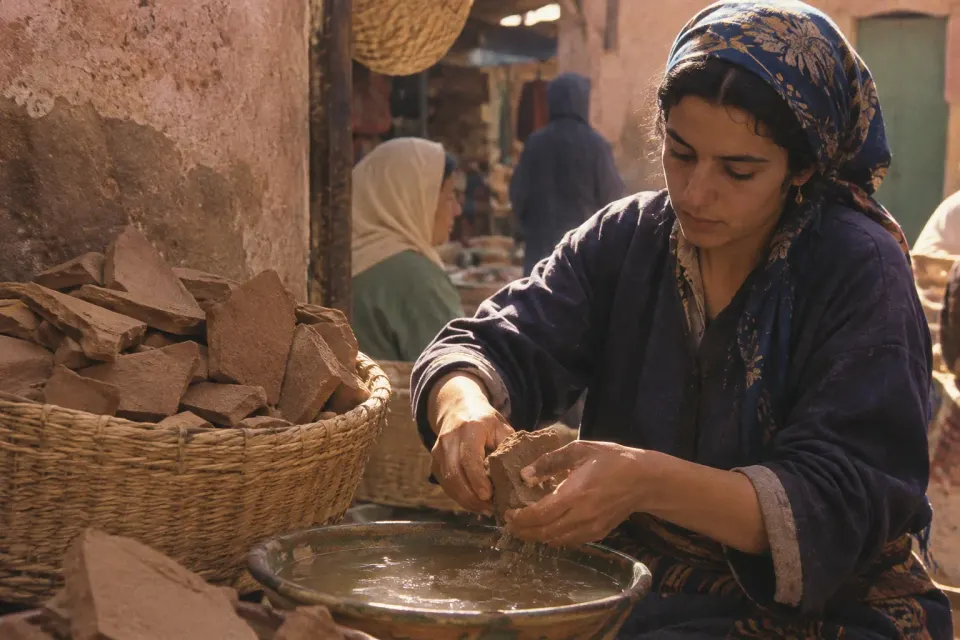
L-ghassoul — written rhassoul in most shops — is a mineral clay from the Atlas. Moroccan women mix it with water, sometimes ma ward, into a soft paste, and wash hair and skin with it in the hammam. It does not foam. It does not need to.
It lifts oil and dust, then you rinse it while it is still soft, never dry and cracked on the skin. If a bag is cheap and pale and the label is a paragraph long, be careful: real ghassoul is usually just the clay.
Rhassoul and ghassoul are the same clay: two spellings of one Arabic word that comes from the verb for washing. Ma ward is rose water. Below is the way it is mixed and used at home, from the bowl to the last rinse, for hair, face and body.
Rhassoul comes from the Moulouya valley, on the edge of the Middle Atlas. It is washed, dried in the sun and sold as brown flakes or as a fine powder. In Moroccan homes it was the wash for hair and body long before bottled shampoo, and it is still the clay of hammam day.
Here is the plain reason it works. Foam comes from soap, and clay is not soap. Wet rhassoul swells into a slippery paste whose fine particles cling to oil, sweat and dust. When you rinse, the clay leaves and takes them with it. That is all. Hair feels clean and light, skin feels smooth, and nothing squeaks.
The order matters. In the hammam, l-ghassoul comes after the steam, after saboun beldi (the soft black olive soap) and after l-kissa, the rough kessa mitt that rolls the dead skin away. Clay goes on skin that is warm, wet and freshly scrubbed, so a thin layer is enough. After it come ma ward and a few drops of zit argan, argan oil, because clay takes oil away and something gentle has to follow it.
And the rule every Moroccan girl learns first: rinse it soft. Clay that dries pulls water out of whatever it sits on, turns stiff, and is hard to rinse from hair. Five minutes wet does the work. Twenty minutes dry only leaves skin tight and hair rough.
Take a glass or ceramic bowl and a wooden spoon, the way it is done at home. Put in 2 tablespoons of rhassoul for shoulder-length hair or for a face and neck, and a little more for long hair or the whole body. If your clay comes in flakes, cover it with warm water and let it sit for a few minutes until it melts before you stir.
Add warm water a little at a time, stirring after each splash. Ghassoul takes a moment to drink the water, so stir, wait a few seconds, and only then decide whether it needs more. Stop when it looks like thick yogurt: smooth, glossy and slow to fall from the spoon. Too runny? A pinch more clay fixes it. Let it rest 2 to 3 minutes and stir once more.
The hammam touch is ma ward. Swap half the water for rose water, equal parts of each. The clay does the same job, but the paste spreads more smoothly and smells of roses instead of earth, and the whole bathroom carries the scent Moroccan women know from the hammam. In Morocco the roses grow around Kelaat M'Gouna, in the south, and are picked in spring to be distilled.
Wet your hair completely with warm water; clay does not spread on dry hair. Take the paste in your fingers and lay it on the scalp first, section by section, because that is where the oil is. Whatever is left goes down to the ends. Massage gently with your fingertips for 1 to 2 minutes, never with your nails.
Then leave it for 5 minutes. If it starts to feel tight before then, sprinkle a little water or rose water over it to keep it soft. In warm weather this wash suits an oily scalp that goes flat quickly.
For the face, make the paste a touch thicker so it stays where you put it. Smooth a thin layer over clean, damp skin and stay away from the eyes and lips. Oily skin with visible pores can keep it for 5 minutes, once a week. Dry or sensitive skin does better with a paste mixed with rose water and only 2 to 3 minutes, or with leaving the face out and keeping the clay for the body.
For the body, the Moroccan moment is hammam day, after the black soap and the kessa. Smooth a thin, even layer over arms, legs, back and chest with your hands, and give it 5 minutes in the warmth of the bathroom. If this is your first time, try a little on your inner arm before the rest.
Rinse with warm water and let your hands help the clay slide off. Keep going until the water runs clear. On hair this takes longer than rinsing a shampoo, so lift the hair at the nape and behind the ears, where the paste likes to hide. Leftover clay is what makes hair feel rough later, so the extra minute is worth it.
Clay leaves hair and skin very clean, so close the wash the Moroccan way. On hair, use your conditioner on the ends, or warm 2 drops of zit argan between your palms and press them into the ends while they are still damp. On the face, a mist of ma ward, then your moisturizer. On the body, your usual moisturizer or a few drops of argan oil on skin that is still slightly damp. Then nothing more until next week.
Letting it dry. This is the big one. A cracked gray mask is not a sign that it is working, it is a sign that it has stayed too long. Rinse at 5 minutes, or 10 at the very most on an oily face.
Pouring in all the water at once. You get a soup, add more clay, and end up with three times what you need. Go slowly and mix only what you will use: fresh paste takes one minute, and yesterday's paste is not worth keeping.
Using it too often. Rhassoul is a weekly wash, not a daily one, and more often can leave hair and skin dry. If you color, heat-style or straighten your hair, start with once every two weeks and see how your ends feel.
Following a recipe written for another clay. Bentonite and kaolin behave differently, so their amounts and times do not transfer. And do not wait for foam, or add shampoo to the bowl to get some: the clay is the wash.
Stopping at the rinse. Skipping conditioner, oil or moisturizer after clay is how people decide that rhassoul is drying. The women who love it never skip the finish.
Start with the back of the bag. The ingredient list should be one line: rhassoul clay, ghassoul clay, or Moroccan lava clay, which is its name on cosmetic labels. Nothing else is needed. The origin should be Morocco, because that is where this clay comes from.
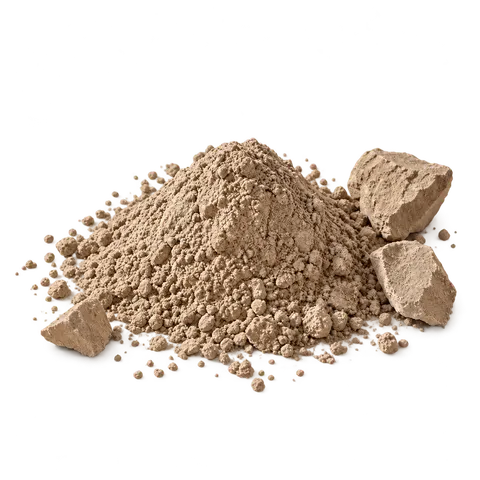
Then look at the clay itself. Real ghassoul is brown, somewhere between beige and gray-brown, in dry flakes that break between your fingers or in a fine powder. It smells faintly of earth after rain, and of nothing else. With water it turns silky, not sandy: if you feel grit between your fingers, it was badly washed.
What a Moroccan grandmother would refuse: a powder that is almost white, a strong perfume, added color, a clay that promises to foam, and a long label full of names she cannot read. A price far below every other bag is a reason to look closer, not a bargain. Flakes and powder both work; flakes take a few more minutes to melt, powder mixes faster. Keep the bag closed and dry, and it keeps well.
A few products that fit this story. You do not have to buy anything: check the ingredients, price and delivery on the seller’s page.
Powder · Amazon.sg
0 reviewsPowder · Amazon.sg
0 reviewsCommon questions
Yes. It is the same Moroccan clay, written two ways. Rhassoul is the spelling most shops use, ghassoul is closer to how Moroccans say it, and l-ghassoul is the same word with its Arabic article. Labels may also say Moroccan lava clay.
Yes, as your weekly wash. It does not foam, so work it into a wet scalp, rinse longer than you would a shampoo, and use conditioner or a little oil on the ends. Many women keep their usual shampoo for the other wash days.
Once a week is enough, for hair, face or body. It is a wash for your hammam day; your usual cleanser does the rest of the week. Every day is too much and can leave hair and skin dry.
Mix a slightly thicker paste, smooth a thin layer on clean, damp skin away from the eyes and lips, and rinse after 5 minutes while it is still soft. For dry or sensitive skin, mix it with rose water and keep it 2 to 3 minutes, or leave the face out.
Yes, you can. But half warm water and half rose water gives the same softness and scent, and your bottle lasts longer.
Better to mix it fresh each time. Two tablespoons of clay are enough for one session, so there is rarely anything left. What keeps is the dry clay, in its closed bag.
No. They are different clays with different results, so follow rhassoul amounts and times rather than a bentonite recipe.
In Singapore you can order it on Amazon. Bodywhatever™ keeps a short selection of what can be delivered there, so you do not have to search through hundreds of listings. Open it here:
Body Notes Journal
Discover Moroccan beauty traditions, learn how to use the ingredients and find products available locally.
By subscribing, you agree to receive these emails. You can unsubscribe at any time.
Make money with Bodywhatever
Create your bwe page for free. Share your routines, add your Amazon links and earn when people buy what you recommend.
Free. Takes 5 minutes. Sign in with an email code, no password.
Turn your wash day, skin night or hammam ritual into simple steps.
Pick the products you really use and add your own affiliate links.
Put one link in your bio and see your page views and product clicks.